Upfront cost, hot-water capacity, lifespan, and the hard-water factor all play into the tank-vs-tankless decision — and there's no single right answer for every home.
Where each one wins
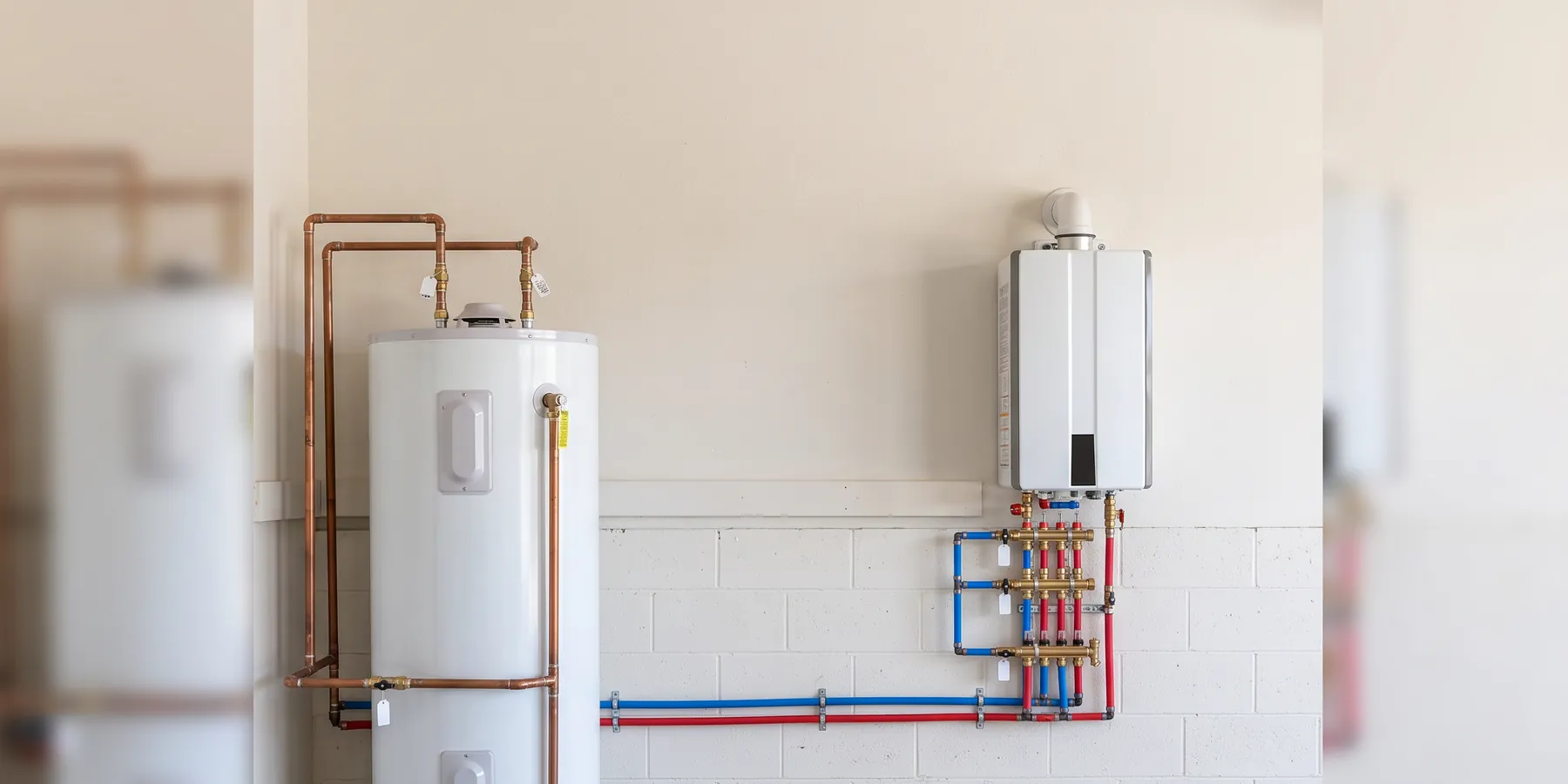
A tank heater is the lower-cost, faster install, and it's forgiving of hard water since a routine flush keeps it running well. A tankless unit takes up a fraction of the space, delivers hot water on demand, and can outlast a tank by a decade or more — provided it gets a descaling service on schedule.
- Tank: lower upfront cost, simpler install, easy to service
- Tankless: compact footprint, endless hot water, longer rated lifespan
- Tank: typically 8 to 12 years before replacement
- Tankless: often 20-plus years with annual descaling
"Tankless isn't automatically the better choice — it's the better choice for the right household. I'd rather size it correctly than upsell it."
Ray Delgado · Founder · Master Plumber
The hard-water question
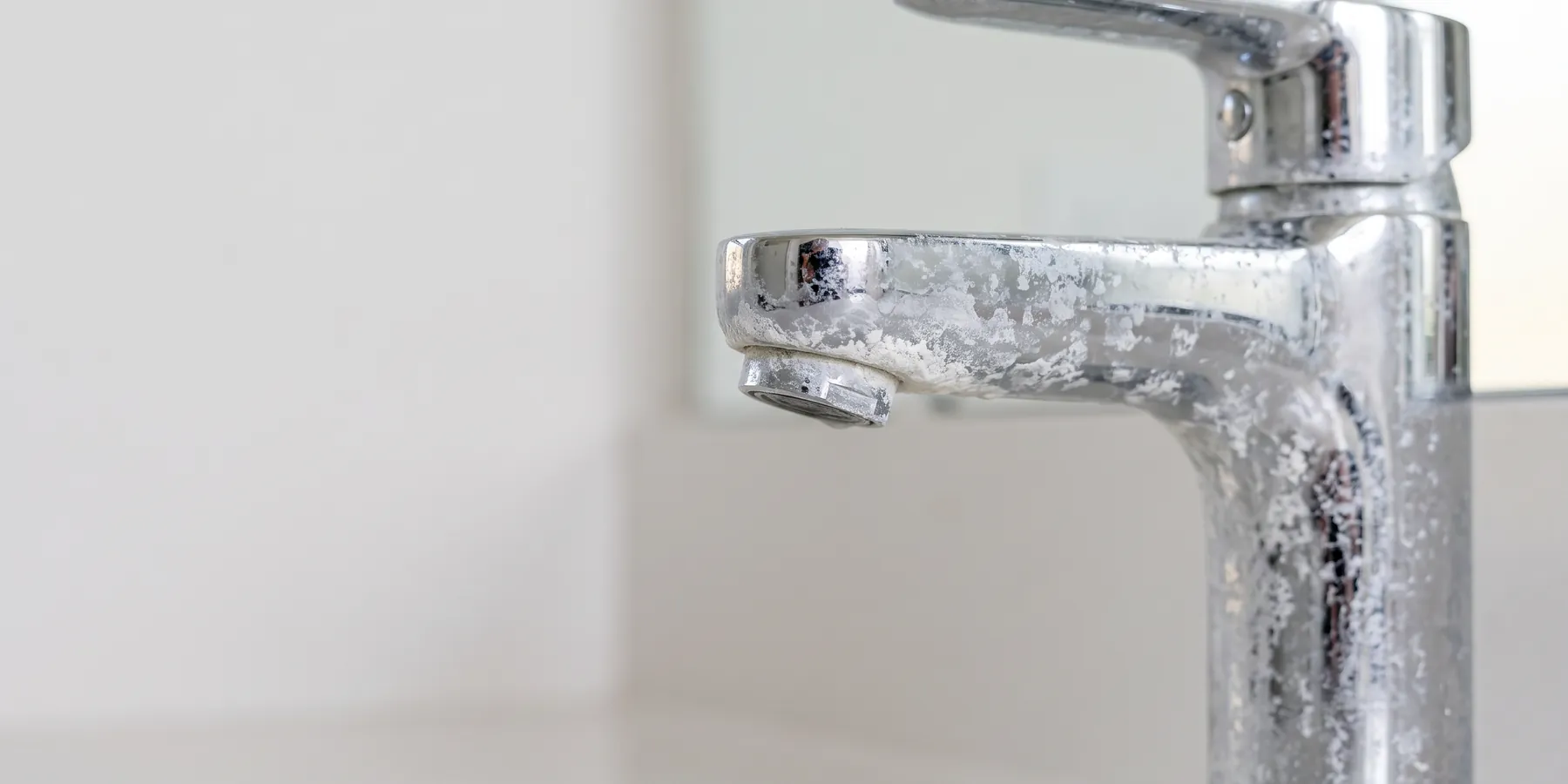
Central Texas water pushes scale into both types faster than soft-water regions, but a tankless unit is more sensitive to it — skip the annual descale and you'll shorten its life dramatically. That maintenance step is the real deciding factor for a lot of households.
The install day, compared
The install itself looks pretty different depending on which way you go. Swapping an existing tank for a new one is usually a same-day job — the new unit is close in size to the old one, the connections are already in place, and in most cases you have hot water again before the tech leaves. Converting to tankless is a bigger undertaking on install day, even though the unit itself is smaller. Because a tankless heater draws more gas and vents differently than a tank, that conversion usually means upgrading the gas line and running new venting to the outside, not just swapping the unit at the wall. That work is worth planning for a full day rather than a quick swap. The payoff shows up afterward in the space it frees up: a tank heater needs a dedicated footprint big enough to hold a full tank of water, while a wall-mounted tankless unit gives that floor or closet space back, which matters in a garage or utility closet where every square foot is already spoken for.
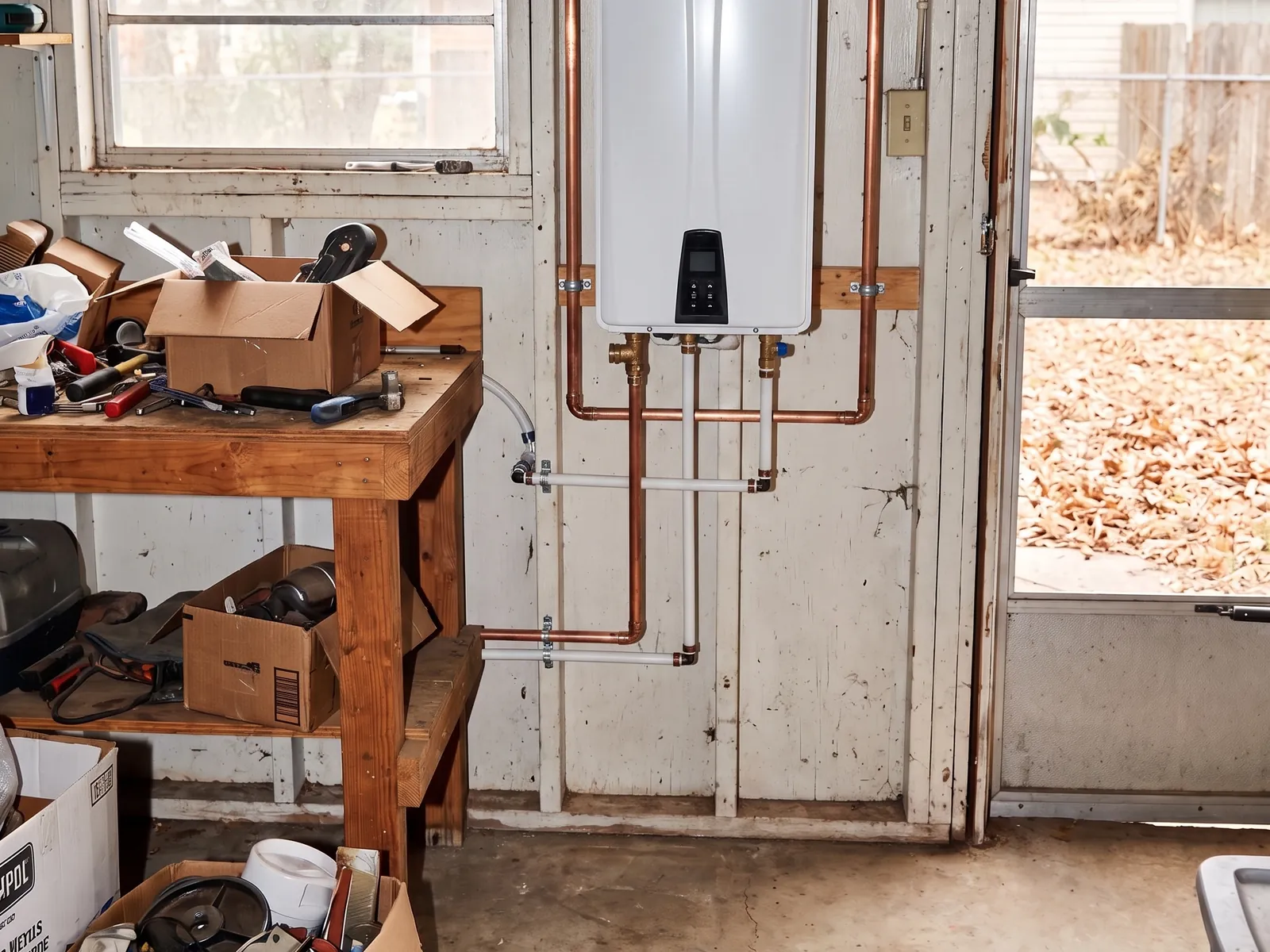
A high-efficiency tank costs less to install and is the budget-friendly workhorse; a tankless unit costs more upfront but saves space and never runs out of hot water. Your tech sizes both to your household and gives you an honest read on which pays off faster in Central Texas conditions.